Chick-fil-A spends millions researching a single street corner before they commit analyzing traffic counts, daytime population, growth trajectory, co-tenancy, and then they publish the answer for free. It's the restaurant.
392. How Developers Build Affordable Housing
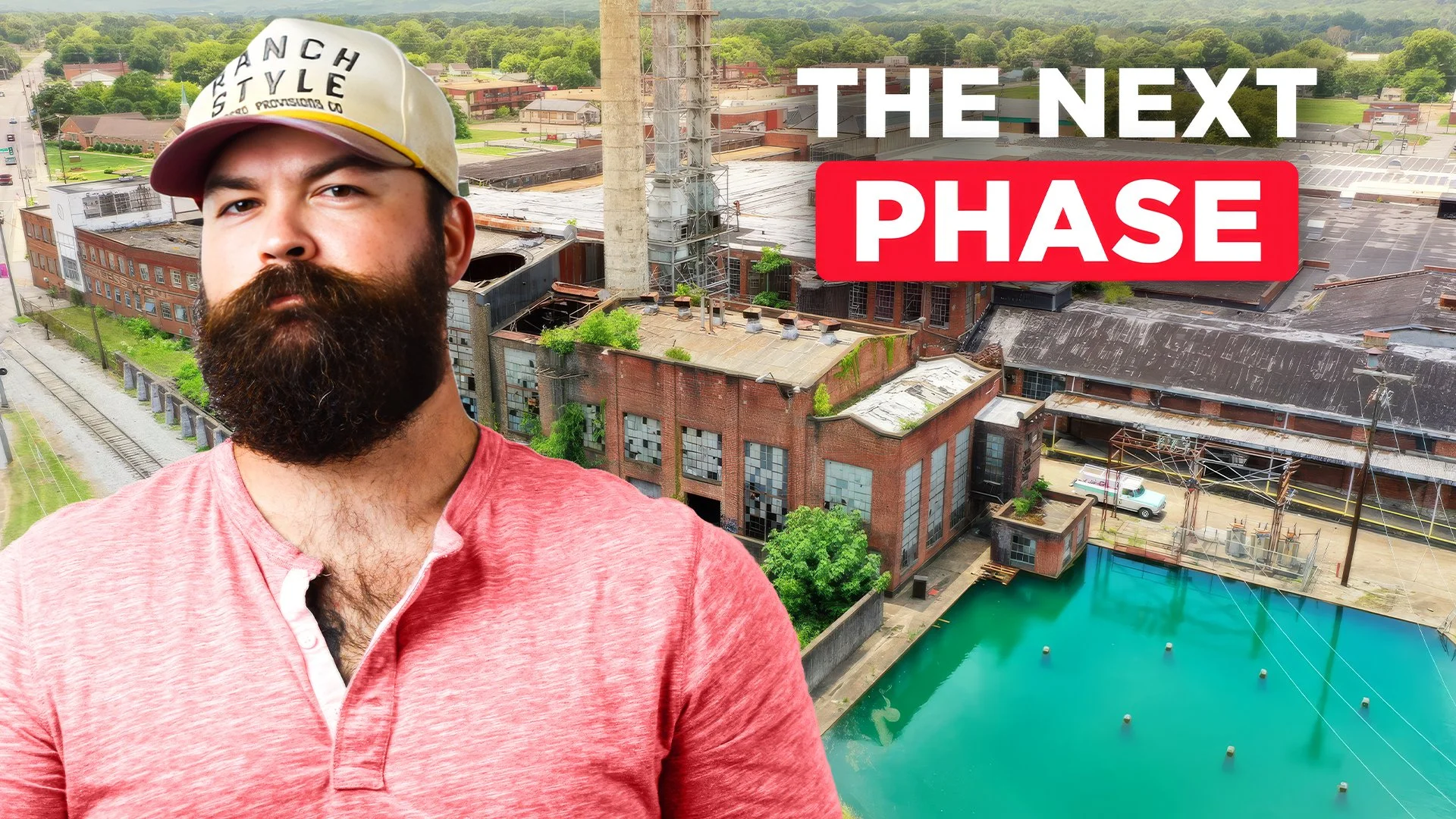
391. I Bought an Abandoned Mill Outside Chattanooga (Peerless Mill Update)
Four years ago, I took on one of the biggest projects of my career: a 1.5 million-square-foot abandoned textile mill just outside Chattanooga.
At the time, a lot of people thought it was too risky. Environmental concerns, vacant buildings, financing challenges—you name it. But I saw the opportunity to create something that could transform an entire community.
In this week's episode, I'm giving you a behind-the-scenes update on where the project stands today. I walk through what's been completed, why we chose to build self-storage before tackling restaurants and retail, how we're thinking about cash flow versus long-term vision, and what comes next as we continue redeveloping the 29-building campus one phase at a time.
390. Why Single Family Rentals Will Never Replace Your W-2
If your goal is to buy enough single-family rentals to eventually quit your job, you may be chasing a strategy that was never designed to get you there.
In this week's episode, I break down what I call the W-2 Paradox—why your paycheck is actually one of the most valuable tools for building wealth, why trying to replace it too early can slow your investing down, and why so many residential investors eventually hit a ceiling.
389. He Found a Commercial Building on Facebook Marketplace (Yes, Really)
Bob spent 13 years as an electrician and quietly built a 75-door residential portfolio on the side. Then his first daughter was born, the tenant calls at night burned him out, and he decided to make the jump to commercial.
A year after he joined the CRE Accelerator, Bob closed on an 8,000 square foot flex industrial building in Lansing, Michigan. He paid $200,000 for it. And he found it on Facebook Marketplace.
388. Watch Us 5x Our Returns in Self Storage (Deep Dive)
Self storage is one of the best asset classes out there, but most investors leave the biggest gains on the table. They buy a facility, raise rents, run it a little better, and call it a day.
That works. It just doesn’t get you to a 5x return. The real money is in adding units. In this episode I sit down with Jamie from Storage Designer to walk through a 105-unit facility we bought in Madison, just outside Nashville, for about $1.7M. It came with extra land, truck parking, and a couple of vacant lots already graded and ready to go. We pull up real CAD designs and work through three different layouts live, weighing unit count against truck access, customer experience, and code. Then we run the numbers.
387. The Real Reason the Best Deals Never Hit the Market
Most commercial real estate investors are fishing the same picked-over pool on Crexi and LoopNet, then wondering why nothing pencils. The best deals never get there. In this episode I'm breaking down the three channels off-market CRE deals actually live in, why brokers preview the good ones to a small list of buyers before any listing site sees them, and a real deal from inside the CRE Accelerator: a $1.5M off-market RV park that's projected to be worth over $5M after a turnaround. The seller never listed it. No broker ever marketed it.
A member of ours found it through direct outreach to the owner. If you're an active investor who keeps losing bids on listed deals or feels like everything you see is already overpriced, this one's for you.
386. How I Bought My First Commercial Property at 25 (just copy me)
385. The 1031 Move That Lets You Buy Before You Sell
Most investors hear "1031 exchange" and immediately think the same thing:
Avoid capital gains taxes.
And while that's true, it's also why so many investors use the strategy incorrectly.
A 1031 exchange is one of the most powerful wealth-building tools in real estate, but it should be part of a long-term portfolio strategy, not a last-minute reaction when you're getting ready to sell a property.
384. Watch Me Underwrite a Real Industrial Deal in 30 Minutes
383. 100 Doors. 35% Returns. Why He's Walking Away.
381. He Doubled His Cash Flow Without Buying a Single New Property
Chris Thorndike bought a rundown $400K warehouse in Gainesville, Florida and converted it into six micro retail suites. Over 120 people applied to rent the six spaces. It has not had a single vacancy in two and a half years. Most investors would have moved on and gone hunting for the next deal. Chris almost did too. Then he looked a little closer at what he already owned.
382. The Tax Strategy High-Earners Use to Offset Income With Real Estate
Most high earners don’t have an income problem.
They have a tax problem.
And commercial real estate investors play by a completely different set of rules.
In this week’s Office Hours, I break down one of the most powerful tax strategies in real estate: cost segregation. Not the surface-level version people throw around online, but how it actually works in practice and why investors use it to create massive first-year tax savings.
380. Graham Stephan Just Made the Case for Commercial Real Estate
If you've been waiting for the right time to buy commercial real estate, this is it - join the CRE Accelerator Mastermind and I'll help you make it happen: https://accelerator.crecentral.com/OO I'm Selling Everything: https://www.youtube.com/watch?v=YJx58bOo5g0 Graham Stephan just made the case for commercial real estate and I don't think he realized he did it. In his recent video "I'm Selling Everything," Graham walked through exactly why he's exiting his entire LA rental portfolio: 4-5% cash flow on equity, the $400 permit fee to replace a $500 fence, the constant "background noise" of being a residential landlord, and a California regulatory environment that's actively pushing capital out of housing.
379. The Tax Code Was Written for Real Estate Investors
Most investors focus on making more money. Sophisticated real estate investors focus on keeping more of it.
In this episode, we break down the tax strategies commercial real estate investors use to build long-term wealth while legally minimizing taxes. From depreciation and cost segregation to 1031 exchanges and refinancing strategies, this conversation covers the exact framework many high-net-worth investors use to compound their portfolios faster.
378. He Stopped Buying Airbnbs and Built a $20M Hotel Portfolio
377. I'm Building 43,000 SF of Flex Space at 1/3rd of The Cost - Office Hours
The going rate to build 43,000 square feet of flex space from the ground up right now is somewhere between $6 and $8 million. I'm doing it for around $2 million and in this week's Office Hours, I'm showing you exactly how.
The answer isn't a secret or a shortcut. It's a structure called the master lease and it's the most powerful tool in commercial real estate that almost nobody teaches.
376. Gold Doesn't Pay You. This Does.
Gold doesn't pay you. It doesn't give you tax benefits. And you have zero control over whether it goes up or down.
In this video, I'm breaking down why commercial real estate is a better hard asset than gold — and I'm using a real deal from one of my Mastermind members to prove it. Matt Barbaccia joined the CRE Accelerator feeling underqualified, then 45 days later closed a 70% vacant flex warehouse with zero dollars out of pocket and no debt payments for the first two years.
375. Why I'd Rather Buy an Empty Building Than a Full One Right Now
Everyone wants a fully-leased building. I'd rather have the empty one, and in this week's Office Hours, I'm going to show you exactly why. Vacant buildings scare most investors off. But in today's market, that vacancy is your biggest advantage: negotiating leverage, below-replacement-cost pricing, and a forced appreciation setup that a fully-leased deal can't match.
374. He Traded His Apartments for a Commercial Building and Made $100k
Chad Acerboni isn't a full-time real estate investor. He's a tech sales executive who's been quietly building a portfolio on the side — one intentional move at a time.
His latest move? Selling his apartment complex, paying zero taxes on the sale via a 1031 exchange, and closing on a 30,000 sq ft mixed-use commercial building for $2.1M. The appraisal already came back higher than his purchase price.