
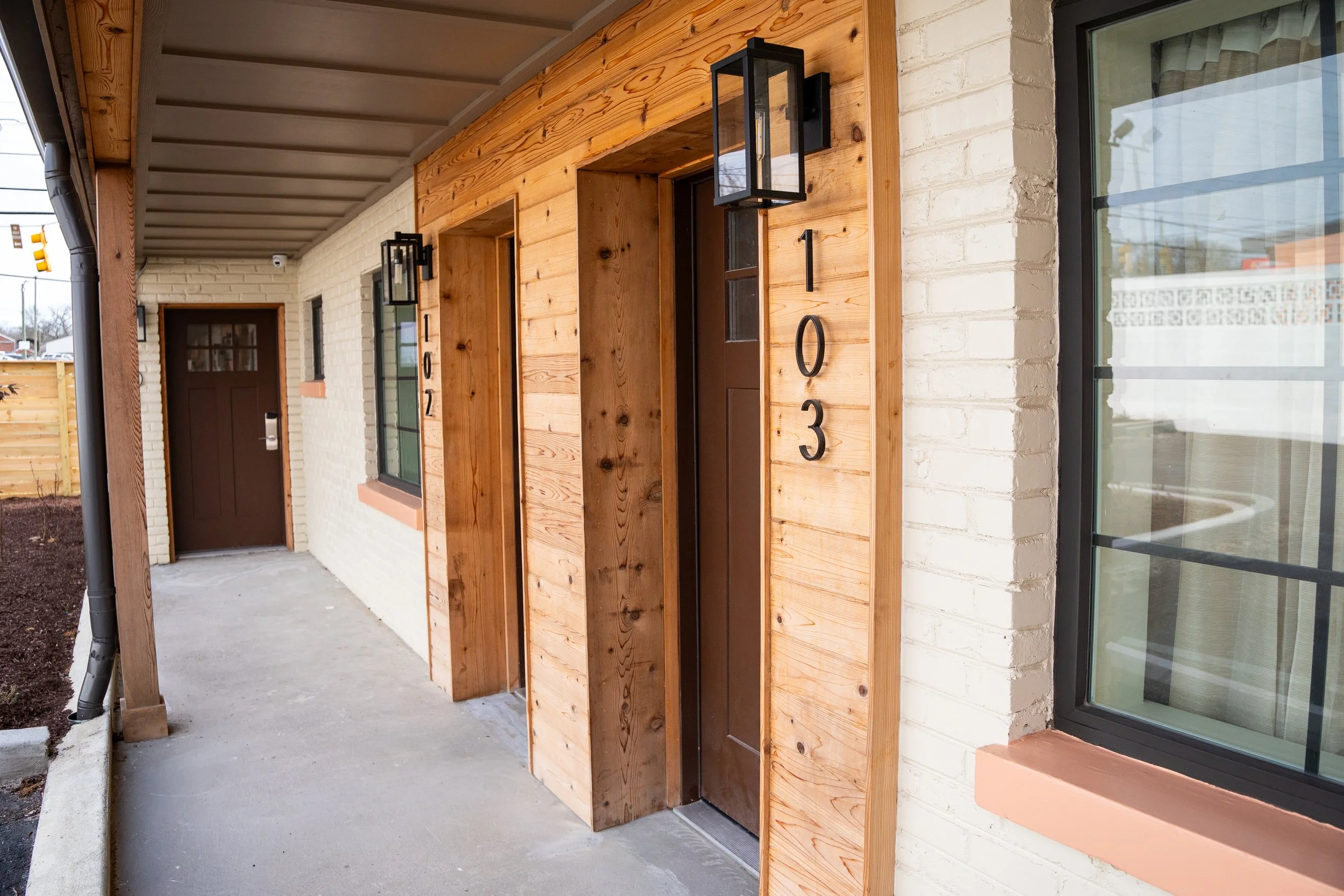
View of the rooms at Salt Ranch
Here's what nobody tells you about building a hotel: the spreadsheet and the reality look nothing alike. I've learned this the hard way with Salt Ranch. And I'm going to walk you through exactly what happened, because if you're thinking about hotel development or commercial real estate development, you need to know this stuff.
Your Timeline Is Wrong From Day One
You buy the property. You tell your lender, "We'll break ground in Q2, be finished by Q4." Your contractor nods. Your lender is happy. Then reality shows up.
With Salt Ranch, we purchased the property and started demo like we were on track. Early momentum felt good. We had a vision, we had capital, and we had a plan. What we didn't have was a clue about what the permitting marathon would look like.
Let me be direct: permitting can eat 6-12 months of your timeline without warning. And nobody puts that in their pro forma.
The Permitting Wall Hits Hard
Mid-2022. We're in the middle of interior renovations. Everything's moving. Then the city inspector shows up and issues a stop-work order. Just like that, the entire project pauses.
The problem? We needed a stormwater easement through the neighboring property. Not optional. Not a nice-to-have. Required by the city before we could finish interior work and move to the next phase.
One easement. One piece of land we didn't own. One problem that could derail months of work.
And that wasn't even the worst part. The city required approvals from multiple Metro Nashville departments. We're talking building permits, grading permits, and separate permits for the motel buildings, the main house, and the pool amenity. Four different permits. Four different departments. Four different timelines.
Four Months Lost to Bureaucracy
By November 2022, we'd eaten four months of construction delays. Four months. That's not a setback, that's a restructuring of the entire project schedule.
Worst part? We had to negotiate the stormwater easement with the neighboring HOA. And if you've ever negotiated with an HOA, you know how much fun that is. It's not. But we got it done, and that easement became a massive milestone in our actual timeline.
Then there were the sidewalk requirements. The city demanded we build sidewalks in certain areas. Cost estimate? Over $100K. Here's the thing: those requirements turned out to be unconstitutional. A court ruling later deemed them illegal. But we had to fight for that ruling. We had to spend time and money defending against a requirement that shouldn't have existed in the first place.
That's the reality of commercial real estate development.
15 Months Later: The Easement Approval
March 2024. Almost two years after we started. The stormwater easement finally got approved.
Think about that timeline. We're not talking about building phases. We're not talking about construction. We're talking about the right to install a stormwater pipe through someone else's land. And it took us 15 months.
But once that domino fell, the others started moving faster. By May 2024, all four permits were finally in hand. Grading permit. Motel buildings permit. Main house permit. Pool amenity permit.
May 13, 2024. That's the date our contractor remobilized. That's when the real construction timeline actually started.
What Really Matters: The Months You Can't See
Everyone focuses on construction. How long until the walls go up? When's the grand opening? Nobody talks about the 15 months of permits and easements and negotiations that have to happen before a single brick gets laid.
Here's my advice: add six months to your timeline for permitting, no matter what your city says. Then add another six months for the unexpected stuff. You'll still probably be surprised.
With Salt Ranch, we lost significant time to regulatory walls. But we also lost carrying costs. Every month the project sits is money flowing out. Interest on the loan. Property taxes. Insurance. Utilities. It adds up fast.
We worked with our lender on timeline extensions and shifted to interest-only periods during the delay phases. That helped cash flow, but it extended our debt service beyond the original projection. That's a cost that has to be built into your pro forma, and most developers don't account for it.
Once the Permits Come Through: Real Progress
May 2024 onwards, things moved differently. We had cleared the regulatory hurdles. Now it was pure construction execution.
Interior demo was completed on all four motel buildings. Masonry repairs came next, then new windows went in. Rough framing. Electrical rough-in. The work was visible and tangible. After 15 months of bureaucratic gridlock, actual progress felt incredible.
Fall 2024 brought site grading and utility installations. The pool got retiling. Custom furniture started arriving on site. We could see the finished product taking shape.
By mid-2025, we're in the final phases. Rooms are complete pending furniture delivery. The pool and lounge are finishing up. The Main House is wrapping up. The project that was supposed to launch in 2022 is finally approaching completion in 2025.
But here's the thing: that delay wasn't wasted time if you plan for it. We learned the construction process better. We refined our finishes. We built relationships with contractors and suppliers. The forced pause, ironically, made Salt Ranch a better property.
The Financial Reality Check
Let's talk money. Extended timelines destroy pro formas. Your interest accrual changes. Your carrying costs balloon. Your market window may shift. Your construction costs may inflate (and they did, between 2022 and 2024).
In commercial real estate development, you have to plan for regulatory delays as a line item, not a surprise. Build it into your budget. Build it into your timeline. Build it into your lender conversations.
With Salt Ranch, we had the capital to absorb those delays. Not every developer does. And that's why so many projects stall out. It's not because the property is bad. It's not because the plan is bad. It's because nobody told them that permits could take 15 months and nobody planned their finances around that reality.
Three Key Takeaways for Anyone Developing
One: Permitting is its own project. Treat it that way. Hire someone who knows your city's processes. Build relationships with inspectors and city departments. The six months you spend on this can save you a year of delays later.
Two: Build financial flexibility into your structure. Interest-only periods. Extended loan terms. Contingency reserves. Your pro forma needs to survive a timeline miss without crushing your cash flow. We worked with our lender on this, and it made all the difference.
Three: Real estate development looks nothing like the first spreadsheet. And that's okay. If you're mentally prepared for timeline shifts and regulatory walls, you can navigate them. If you're not, they'll break you.
The Salt Ranch Timeline We're Actually Living
We bought a roadside motel with a vision. We started strong. Then we hit the regulatory wall that nobody plans for. We pushed through it, learned the system, and got all permits in place. Now we're executing, and Salt Ranch is becoming the boutique hotel we imagined.
But the timeline that matters isn't the one on the first spreadsheet. It's the one that factors in reality.
If you're thinking about getting into hotel development or any commercial real estate development, understand this: the permitting marathon is real. The carrying costs are real. The extended timeline is real. Plan for all of it, and you'll survive. Ignore it, and you'll be one of those projects that never quite makes it.
That's the truth nobody tells you about building a hotel.
Related Reading in the Salt Ranch Series
Ready to Develop Your Own Project?
Understanding the timeline is just the start. If you're serious about commercial real estate development, you need a system. That's why I built the CRE Accelerator.
Learn how to navigate development, financing, and execution so your project timeline actually matches reality.
This post is part of the Salt Ranch Series, documenting the full story of building a boutique hotel in Nashville from finding the deal to financing, design, construction, and opening day.
Read the Full Salt Ranch Series:
- How an Old Roadside Motel Became Salt Ranch
- How to Finance a Boutique Hotel
- How I Analyzed a $3 Million Motel Deal
- Boutique Hotel Design: How We Turned a 1950s Motel into Salt Ranch
- How to Build a Hotel: The Development Timeline Nobody Talks About (You Are Here)
- How to Start a Boutique Hotel: Lessons from Building Salt Ranch
Visit Salt Ranch to see the finished product.